
As 2025 comes to an end, at PowerHub we’re looking first and foremost at what matters most to Sellers: less manual clicking, less switching between panels, and more time to actually grow the business.
Behind us are twelve months of intensive development: regular “Update Lists”, new integrations with marketplaces and carriers, the launch of the returns module (RMA), expansion of warehouse processes, and the first AI-powered features.
2026 will be another step forward – marked by even more integrations, much more advanced AI, and the drive towards fully automated listing creation.
Below, we’ve decided to summarise what PowerHub can already do today, which changes we introduced in 2025, and what directions of development we’re planning for 2026.
What can PowerHub do today?
PowerHub is the central place for managing multichannel sales – from listings and orders, through warehouse and shipments, all the way to sales documents and automation.
Today, every PowerHub User can:
- Connect all sales sources – marketplaces, online stores, ERP/WMS systems and carriers – thanks to over 70 ready-made integrations, with a single standard for handling orders, products, listings and shipments.
- Manage orders from a single panel – create custom statuses, automatically generate documents, labels and shipments, send notifications to customers, and reconcile payments.
- List and update offers across multiple channels – in bulk, with automatic category and attribute selection, description translations, and synchronised prices and stock levels.
- Synchronise stock and prices across all sales channels, taking into account orders pending fulfilment.
- Automate work – through extensive automation rules that change statuses, select shipping methods, generate documents, print labels, or send messages to customers.
- Handle shipments and returns – with full support for multiple carriers, pickup points, manifests, and the returns (RMA) module.
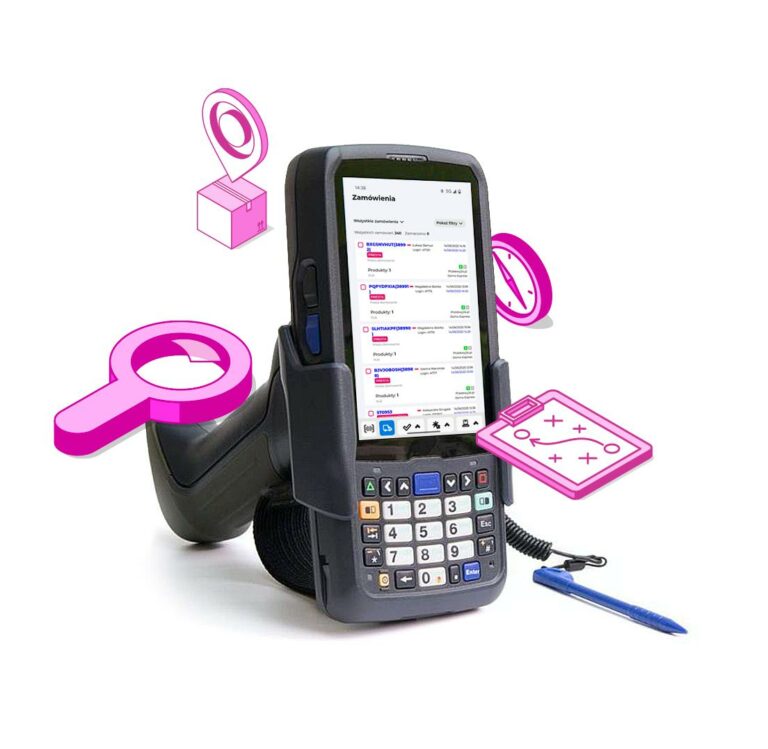
- Work in the warehouse on mobile – thanks to the PowerHub Assistant app for Android, which guides warehouse staff step by step through picking, packing and shipping orders.
This is the foundation on which we’ve built all of this year’s updates.
2025 in PowerHub – key changes
1. A year of integrations: marketplaces, online stores and carriers
In 2025 we focused heavily on integrations – both on the marketplace and store side, as well as on logistics:
- Extended Shoper integration – improved order import and better shipment handling made everyday work more seamless for sellers using this platform.
- New carriers – including the addition of Zadbano and the development of existing integrations, which made it easier to tailor logistics to different warehouses and shipment types.
- PowerHub x Meest integration – a new carrier with a strong focus on international shipments and pickup points, along with additional services such as the “Consumer return”.
- New marketplaces and eCommerce integrations – including product and offer import from eBay (with stock and price synchronisation) and continual development of integrations with IdoSell, PrestaShop, Erli and other platforms.
- December update – added integrations with Rozetka, Aukro, Shoptet Premium and Shoptet Free, and expanded the Empik integration with offer import and synchronisation.
The result: even more sales channels you can manage from a single panel – including markets in Central and Eastern Europe.
2. Warehouse and logistics – mobile handling and better processes
The second major area of development in 2025 was warehouse operations and day-to-day logistics:
- New PowerHub Assistant mobile app – allows picking, consolidating and packing orders directly from a phone or data collector. It guides staff through locations, supports different picking scenarios (single order, multi-order, batch picking), handles label printing and takes a significant portion of manual work off the team.
- Picking paths and order status updates – the app automatically updates statuses (e.g. “picking”, “packed”, “ready to ship”), and all actions are visible in real time in PowerHub.
- Development of logistics integrations – including extended integration with Meest and improvements to shipping documents and product lists, which translated into smoother parcel preparation.
All of this lays the groundwork for the next stage – a new warehouse management system in 2026.
3. Returns under control: the RMA module
Returns, complaints and service repairs have long been among the most frequent topics in conversations with our users. In 2025:
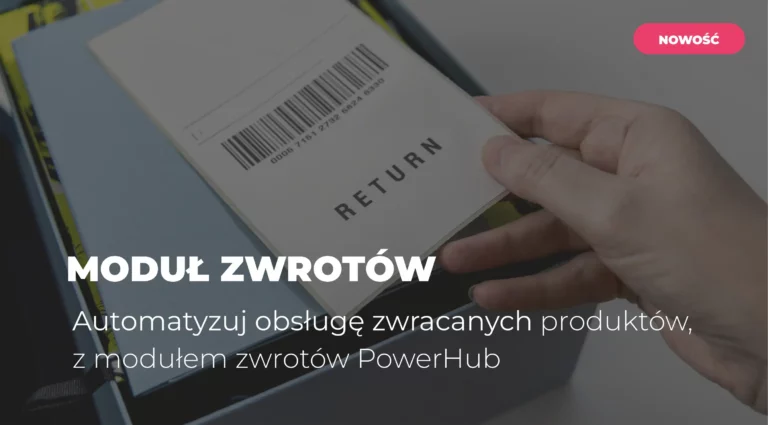
- we released the new returns handling module (RMA) – available at no extra cost for all users, designed to handle returns, exchanges and repairs in a single process, regardless of the sales channel.
- the module makes it possible to automatically retrieve returns from all channels, standardise case handling, generate documents and integrate the process with warehouse and accounting workflows.
- if a given sales channel does not have its own return form, the customer can use the extended order page in PowerHub – choose products, provide a return reason and download a label.
Thanks to this, returns have become a natural part of the PowerHub ecosystem – just like orders or shipments.
4. More automation and the first AI features
Practically every update this year included new automation capabilities:
- we extended conditions and automation actions – for example with country negation, payment-related parameters and new rules for selecting shipping and packing methods.
- we expanded the logic of lists, filters, templates and imports to make working with large catalogues of offers and orders easier.
The key change arrived in November:
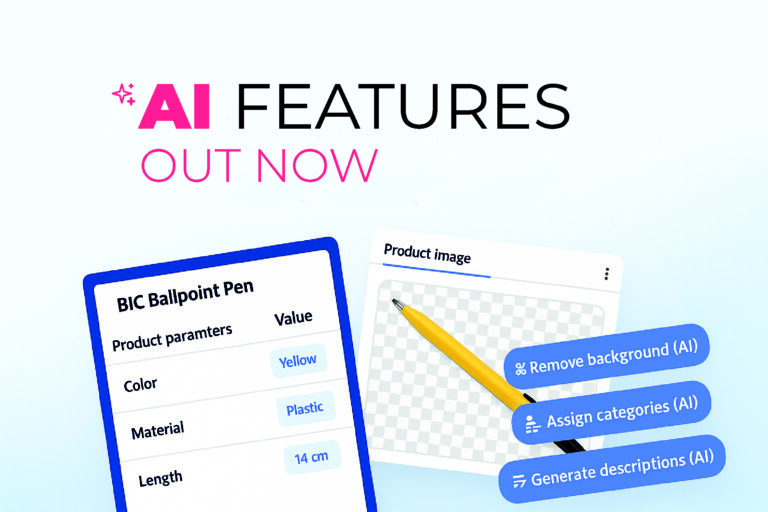
- AI-generated product and offer descriptions – a new feature that allows you to create listing content directly in PowerHub, based on product data and seller preferences.
- we also introduced new automation conditions: “Best matching carton” and “Fits in carton”, which help you better control the packing process.
This is just the first step – the most important AI developments are planned for 2026.
5. PowerHub goes more international
In 2025 we also doubled down on users outside Poland:
- the mobile app and system modules were translated into additional languages (including Czech, Slovak, Hungarian, Romanian, Bulgarian, Greek and English),
- in the October update, full translations of the mobile app and the login module (Gate) were released, which significantly simplifies onboarding for users from different countries.
Combined with new integrations on foreign markets, PowerHub is increasingly well prepared to handle international sales.
What’s next for 2026? Key directions for PowerHub
The changes described below are planned for 2026 – this is the development direction our product team is working on. Exact release dates may vary, but the priorities are clear.
1. A year of integrations: new marketplaces, online stores, carriers and ERP/WMS
2026 is set to be a year in which integrations take centre stage:
- over 70 new integrations with marketplaces and online stores – selected based on the needs of sellers using or planning to use PowerHub, including international sales platforms,
- expansion of integrations with AI-based marketplaces – built around the Agentic Commerce Protocol and the Agentic Checkout specification, a new standard for agentic commerce in ChatGPT, developed by OpenAI as part of Instant Checkout,
- over 40 new carriers across Europe – so that logistics can keep pace with growing international sales,
- integrations with ERP and WMS systems, as well as fulfillment operators – so that PowerHub can become the central integration layer between sales, warehouse, logistics and accounting.
The goal is that no matter where you sell and what your logistics setup looks like, PowerHub is the one, coherent place to manage the entire process.
2. AI for everyday work – content, communication and PowerHub Assistant as a Contact Center
Building on the AI description generation feature, we want to go several steps further:
- advanced AI tools for managing product content – so that descriptions are better matched to buyers, support SEO and sales, and images and visual assets can be created faster with intelligent suggestions,
- automatic communication with buyers (email + chat) – AI will help handle messages in the customer’s language (with automatic translation for the agent inside PowerHub), answering the most common questions based on data from orders, shipments and returns,
- PowerHub Assistant as a mini Contact Center – extending the app with functions that, during a call (phone, email or chat), immediately display full order details, payment status, shipment status and any returns.
We want AI to truly offload operational and customer service teams – while keeping full control in the hands of the Seller.
3. Full automation of product listing and offer management
The next step in PowerHub’s evolution is to turn the system into an “autopilot” for offers:
- automatic creation of offers in all selected sales channels – based on product data, templates and rules, without manually listing on every marketplace separately,
- intelligent listing rules – taking into account channel, country, currency, margin, stock levels, customer type (B2C/B2B) and the specific requirements of each platform,
- coherent lifecycle management of offers – from first publication, through content and price updates, to retiring and relaunching them on new markets.
Ultimately, the user decides what and where they want to sell – and PowerHub takes care of the rest.
4. New PowerHub interface
In 2026 we will gradually roll out a new PowerHub interface:
- a clearer layout and better visibility of key information (statuses, alerts, KPIs),
- a modern visual layer, aligned with current trends in business applications,
- unified UX patterns across modules (Offers, Orders, Shipments, Returns, Warehouse),
- better performance and usability for large lists (filtering, sorting, saved views).
UI changes will be introduced step by step, so as not to disrupt daily work and to give users time to calmly test the new views.
5. New warehouse management system and PowerHub Connect
The last, but very important area of our 2026 plans is warehouse and stock:
- rebuilding warehouse functionalities – simpler inbound processing from suppliers, easier allocation to warehouse locations, better stock visibility across multiple warehouses,
- full handling of warehouse documentation – all key documents (GRN/IN, GIN/OUT, stock transfers, stocktakes) in one system, with the option to automate them based on rules and actions,
- PowerHub Connect (second half of 2026) – the ability to publish a product catalogue in the cloud, with the option for manufacturers and wholesalers to fulfil orders on behalf of the Seller.
This is a step towards a model in which PowerHub connects not only sales channels and warehouses, but also partners across the entire supply chain.
Summary – together into 2026
For PowerHub, 2025 was a year of:
- expanding integrations with marketplaces, online stores and carriers,
- launching the returns module (RMA) and strengthening logistics processes,
- bringing the mobile app into the warehouse,
- and introducing the first AI features that help create offer content.
2026 is shaping up to be a time of:
- intensive integration development (over 60 marketplaces, around 40 carriers, ERP/WMS and fulfillment),
- significantly expanded AI capabilities (content, communication, Contact Center),
- full automation of listing and offer management,
- a new, clearer interface,
- and a new stock management system plus PowerHub Connect.
Thank you for developing PowerHub together with us.
Whether you’re wrapping up the year calmly or already gearing up for an intense Q1 – we want PowerHub to give you what really matters: higher sales and lower operating costs.
See you in PowerHub in 2026! 💙